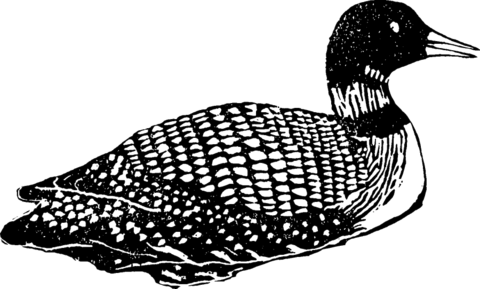
“Speak, Bird, Speak: Seeds, Birds, and Memory”
“Speak, Bird, Speak: Seeds, Birds, and Memory”
When artist Areej Huniti visited Umeå as part of the IASPIS residency, I attended her talk at the artist-run gallery Verkligheten and spent time in conversation with her during her stay. We spoke about the militarisation of birds, the destruction of the Palestinian seed bank, and how stories and seeds travel under conditions of control. Her reflections stayed with me and became one of the starting points for Speak Bird Speak.
Speak, Bird, Speak Again is the title of a book of Palestinian folktales by Ibrahim Muhawi and Sharif Kanaana, first published by the University of California Press in 1989.
I live in northern Sweden, surrounded by birch, pine and spruce, where magpies, jays and nutcrackers cache seeds through the winter. I’ve never seen Palestine in person, only through what others record and share. This war feels close. Technology, media and climate make its effects immediate. Food systems, migration and ecological loss are all connected; what happens to a seed bank in Hebron links to broader patterns of control.
In the summer of 2025, Israeli forces demolished the Palestinian Seed Multiplication Unit in Hebron, the country’s only national seed bank. It had safeguarded more than seventy native crop varieties (grains, legumes, herbs and vegetables), all adapted to the dry soil and long memory of the West Bank. Its destruction is the loss of a basic human right: people’s ability to feed themselves on their own terms.
Seeds carry adaptation, stories and instructions written through generations of care and observation. When a seed bank is destroyed, what is lost is not just food security but a living record of how to inhabit a place.
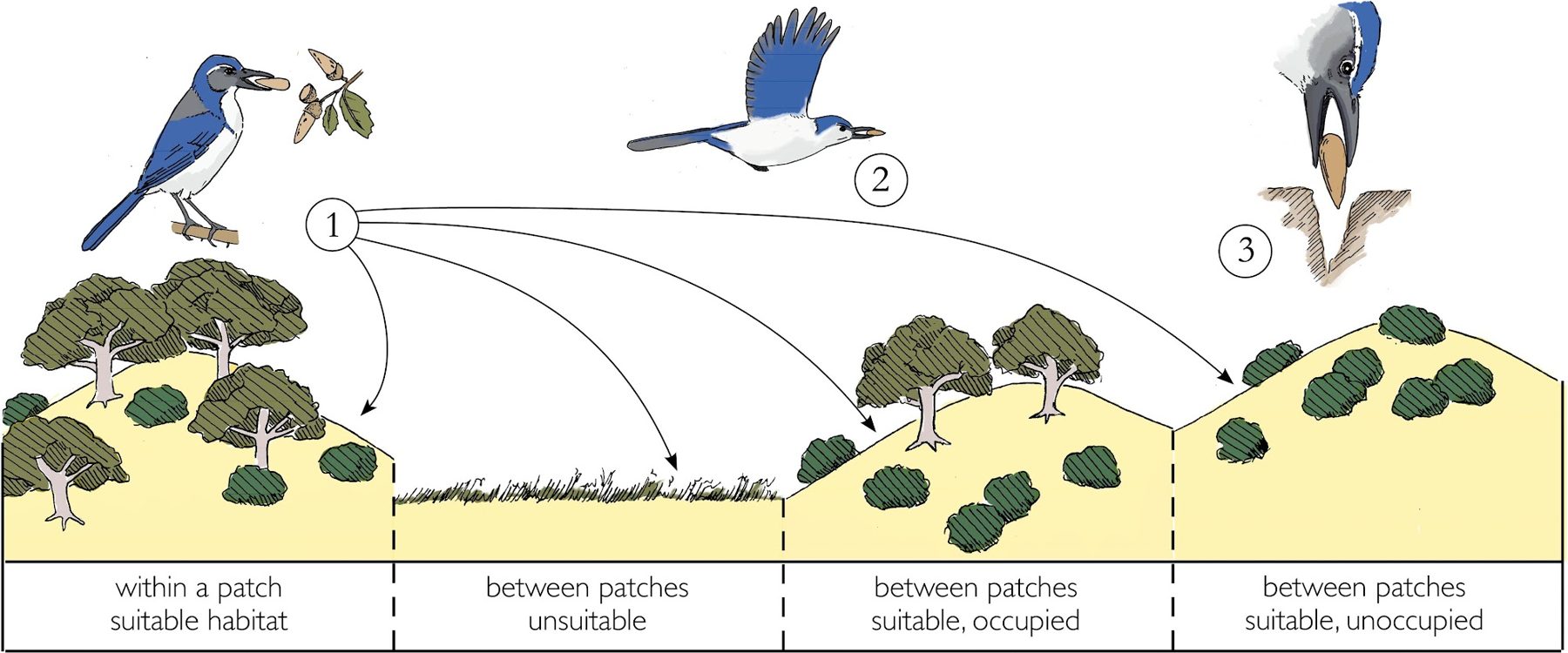
Across the same hills where that seed bank once stood, Eurasian jays (Garrulus glandarius atricapillus), hooded crows (Corvus cornix) and rock nuthatches (Sitta neumayer) bury acorns and pine nuts for winter. Forgotten caches sprout new trees: oak, pine, almond. This process, known as scatter-hoarding, unfolds through caching and shifting ground. Some caches are never recovered as the landscape changes, and from those buried seeds, new forests grow.
Through the act of caching, their scattered hoards create future forests. They act without map or plan, trusting the land to remember what they forget. The forest grows from loss.
The seed bank and the jay both hold this logic: the knowledge that regeneration depends on care distributed across space and time, on a network of small, persistent acts.
In Palestinian folk tradition, the pomegranate is a symbol of memory and abundance. In one story, each seed holds an ancestor’s soul, a piece of the land’s remembering. The tale reminds us that to scatter is not to lose, but to multiply presence.
So when the Hebron seed bank was reduced to rubble, the memory it held did not end. It dispersed into farmers’ pockets, into diaspora collections, into fragments of soil that may still germinate. Like the forgotten acorns of the jay, some of those seeds will rise again.
To stay with such a trauma is not an act of optimism but of entanglement. It means acknowledging that life continues through cracks, that persistence often looks like error, and that resistance can take the form of quiet replanting.
To speak, to scatter, to stay: this is how the land remembers. And how resistance takes root.
Speak, bird, speak again.
Notes & Sources
- Hebron seed bank destruction: Friends of the Earth International, August 2025; The New Arab, “Israel Destroys Palestinian Seed Bank Facilities in West Bank,” July 2025.
- Scatter-hoarding: Bossema, I. (1979) “Jays and oaks: an eco-ethological study of a symbiosis”, Behaviour 70.
- Folktales: Ibrahim Muhawi & Sharif Kanaana, Speak, Bird, Speak Again: Palestinian Arab Folktales, University of California Press, 1989 (new edition 2021, foreword by Ibtisam Barakat); “Hab al-Rumman / Pomegranate Seeds.”